Roundtable Discussion among Outside Directors
Working toward a corporate structure
that performs well under change
for the next stage of growth
Assessment of the first fiscal year of the Medium-term Management Plan and future issues
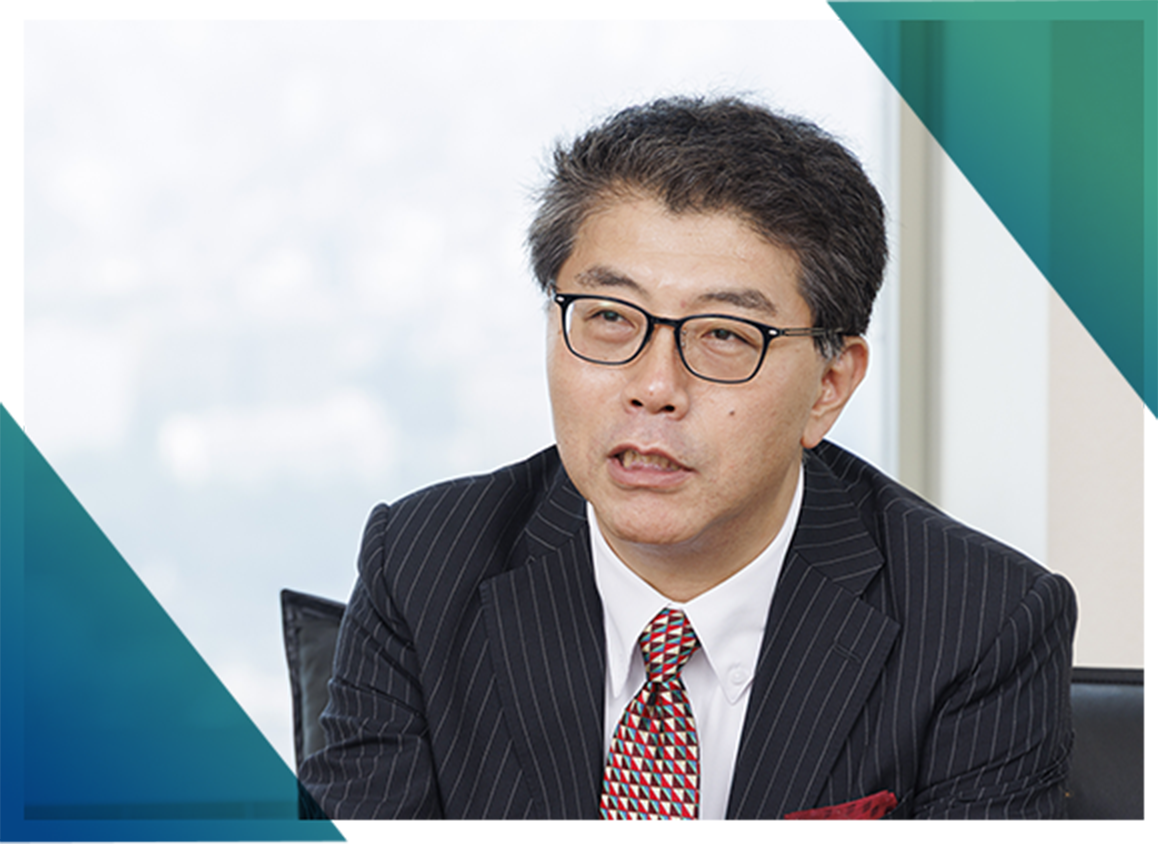
- Yokokura
- I give the first fiscal year of the Medium-term Management Plan passing marks in that it generally progressed as planned.
Although the Payment Business proceeded with structural reforms and performed above expectations, the Global Business seems to have produced varying results depending on the region, despite having shown strength in India and Vietnam.
- Sakaguchi
- Given the strong financial results for the first fiscal year, indications are that Credit Saison will likely achieve the targets set under its Medium-term Management Plan. On the other hand, I get the impression that with the faster-than-expected rise in interest rates the Company has now moved from a stage of expansion based on asset growth into a new stage in which the performance of businesses focused on asset efficiency will come into question. I also feel the Global Business has exhibited certain weaknesses because it operates in emerging countries.
In a similar vein, at the Board of Directors, I have pointed out that ROIC has fallen below the risk-free rate in some countries. When considering ROIC improvements against the backdrop of rising interest rates, I believe that the Company is approaching a stage where it must consider strategically focusing on its core competencies with an eye to the profitability of each business. The Company must therefore engage in more debate over ways to organize budgets and set KPIs. Looking especially at the Global Business, I feel that Credit Saison must further deepen discussions over the levels of return in emerging countries, which present both high risk and high potential, that would be required for success, and other similar perspectives.
- Hoshiba
- Credit Saison’s monthly performance reports clearly reveal the strong commitment to achieving numerical targets among the directors in charge. The Company has also sought to evolve its governance structure, for example, by renaming the Audit Office to the Audit Department in FY2024, and establishing a new Domestic Audit Office and Global Audit Office within this department. While the existing structure is designed so that the low-profitability Payment Business underpins the Company, it seems to me that achieving the targets in the Medium-term Management Plan is highly reliant on the Global Business. Providing loans to underserved segments in emerging countries, however, is a business with major social significance from the perspective of financial inclusion, and as long as the loan collection system functions, I expect this business to serve as a means of increasing profits and strengthening the credibility of the Credit Saison brand. I look forward to and anticipate much from the Saison brand spreading throughout the world. Yet as Mr. Sakaguchi just pointed out, I feel the Company must also carefully identify the roles that new businesses are to play as part of efforts to achieve the Medium-term Management Plan.
- Makiyama
- The better the times, the more careful the Company must be in sowing the seeds in anticipation of the next Medium-term Management Plan. Although I understand Credit Saison is focused on the global stage, as interest rate conditions sway wildly with changes in international affairs, the Global Business will serve as a centrifugal force for growth while presenting risks. Risk management as part of business expansion in emerging countries is therefore important, which is why I feel the Audit Department must be objective in its analyses. During good times it becomes more difficult to make regressive judgments like business downsizing and withdrawals, yet I feel the era we now enjoy demands more flexible, faster decision-making that accounts for international affairs and is based on risk assessments.
In Japan, Credit Saison is recognized as a brand backed by the support of the middle-aged and senior customer segments that have enjoyed a spiritually rich lifestyle. However, the key to future growth as I see it will be efforts to extend the brand through proposals to younger customer segments. Although these younger segments involve a relatively high risk of bad debt, the Company can minimize the risk of fraud through strict screenings and advanced systems.
- Yokokura
- The Global Business has only been around for a short time, so amid the different regulations, economic and interest rate trends, and other aspects of the business environment in each country, variation in growth curves is only natural. Rather, you could say this variation offers greater stability given the risk of failure when over- focusing on any one country. On the other hand, I feel Credit Saison is now at the stage where it must firmly review the areas where the Global Business has succeeded and struggled, and consider resource allocation, the setting of country- and business-specific KPIs, and supportive measures while managing the balance sheet as part of an overall strategy.
- Hoshiba
- The Company should also clarify its risk appetite and exit strategy for each country.
- Yokokura
- I agree. Based on the experience that Credit Saison has accumulated to date, I expect it to steadily advance to the next stage of growth.
- Sakaguchi
- Although exit strategies are also important, it seems that as the Global Business takes risks on one hand, it also faces a gap between actual profits and anticipated profitability.
We must work together to deeply debate the desired return for the Global Business, but not exclusively so, and aim for growth after determining the policy following a judgment on this return.
- Makiyama
- When reality diverges from what was initially expected, companies will sometimes decide to establish an extraordinary extension for achieving targets. The world today, however, demands that we make fast-paced, flexible management decisions because the business environment now changes drastically on an annual basis.
Improving capital efficiency and PBR
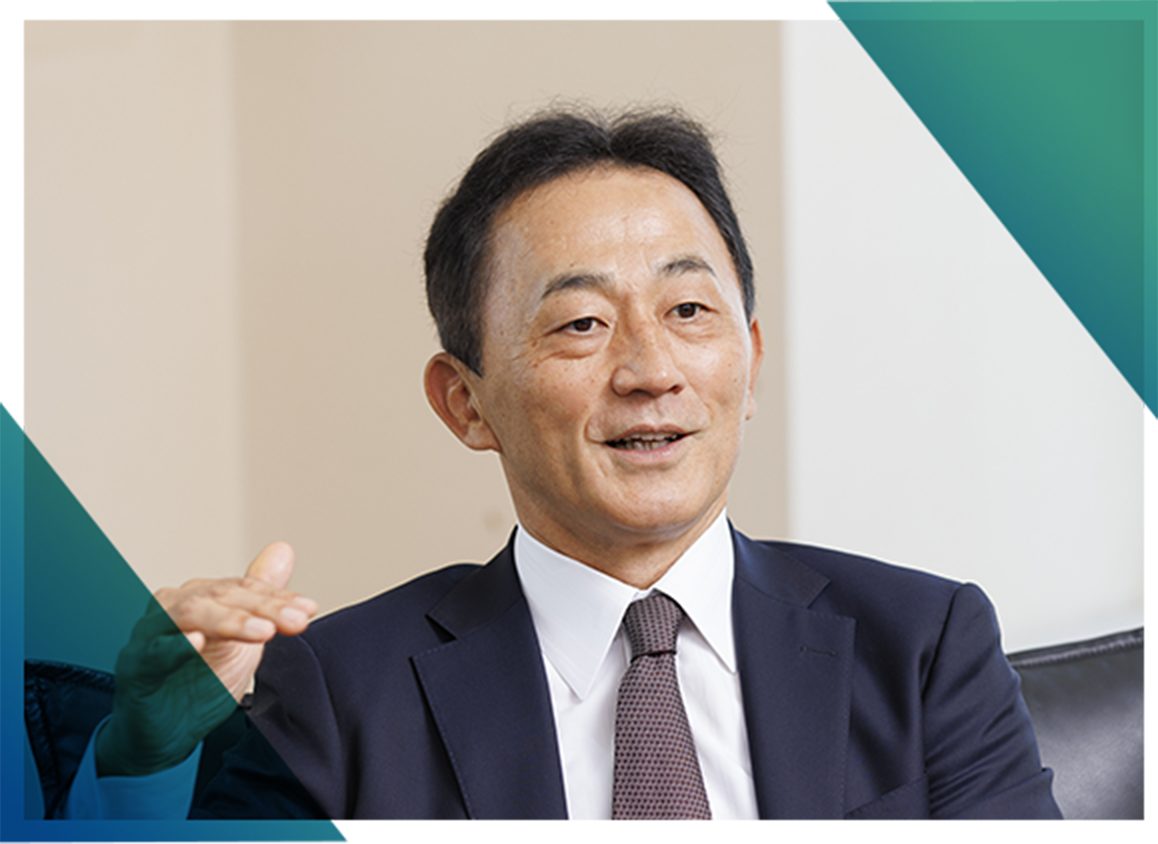
- Sakaguchi
- Although we have debated what needs to be done to improve PBR fairly often and have calculated the return for each business, there are still many businesses that have not met the cost of capital (as measured by WACC, for example), which means ROA remains low. With this in mind, I feel the Company has reached a point where we should debate the merits of business continuity while keeping an eye on the profitability of each business against the backdrop of faster-than-expected interest rate hikes. In the past, when I suggested that Credit Saison should be more aware of the productivity of every employee on an individual basis, each department immediately stepped up and significantly improved labor productivity within a short time. Combining labor productivity with asset efficiency is what leads to a better ROA, so if the Company further enhances asset efficiency, I believe we will also start to see it achieve a PBR above 1.
- Hoshiba
- It seems to me that the Company’s stance on challenging unprecedented projects in the credit card industry like real estate security tokens and the corporate restructuring business in an effort to effectively utilize assets stays true to Credit Saison. In turn, I expect to see this help improve PBR.
- Makiyama
- In the case of Credit Saison, I think that the right approach would be for it to prioritize the balance between balance sheet management and ROA, and begin by seeking to increase ROA before ultimately linking this to an improvement in ROIC.
- Yokokura
- As the balance sheet balloons in terms of the business structure, Credit Saison’s efforts to increase profits through businesses that do not rely on the balance sheet, like guarantee services and service fee businesses, and its more recent real estate security token business, lie along this path. At the same time, however, the Company is also striving to expand products that generate yields whenever possible as part of the replacement of assets. With its major impact on the balance sheet, the Payment Business must secure financing, which is why the Company is looking to improve ROA by advancing structural reforms as it faces rising financing costs and downward pressure on participating merchant service fees.
This is a challenging approach in that the outcomes will not create drastic improvements in the overall balance sheet. That said, along with making repeated efforts in this direction, I believe this approach will also connect to improved PBR if the Company can foster growth expectations on the capital markets by bolstering the Global Business and through proactive IR activities.
- Sakaguchi
- The Payment Business relies heavily on the balance sheet, so the first step to improving ROA will be to discuss how to strengthen competitiveness for the Payment Business looking 10 years into the future in a way that also involves earnings structure reform.
Credit Saison’s corporate culture
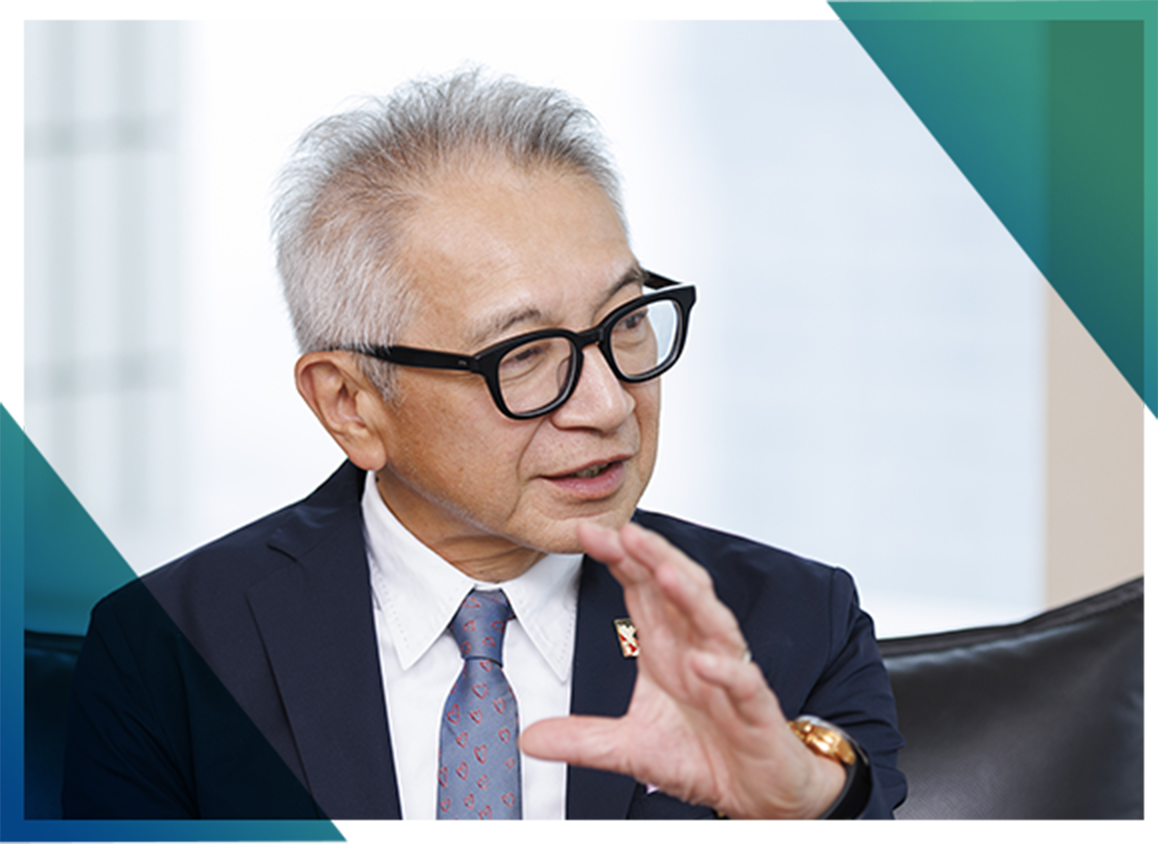
- Makiyama
- In my previous position, I could not have been further from the management team at Credit Saison, which gave me the opportunity to see just how employees worked with pride in the Saison Group and with a sense of job satisfaction. The former Saison Group possessed the ability to create new cultures and change lifestyles. As the core of that group, the Company had continuously solicited various ideas from its employees. This is a strength I hope to see it carry over.
- Yokokura
- Despite the Company’s strait-laced corporate culture, my impression is that this culture actually has a kind of cultural playfulness in terms of its true nature.
It appears to me that the concept of a comprehensive life services group actually emerged from Saison’s true nature, which is why I am interested in how this idea will enrich the lives of people around the core of finance.
- Sakaguchi
- To me, it seemed the Saison Group had an impact on many young people in the 1980s as a presence that led the era by proposing new value. In addition to edgy ideas, I also feel it possessed a coexisting culture that prioritized active opinion exchanges within the organization. Once I began participating in the Company as an outside director, I was happy to see that the camaraderie among employees and shared values remained intact, yet I rarely see hints that employees are consciously seeking to create a new era through their own proposals. So, I hope to see the younger generations discover the true nature of Saison.
- Hoshiba
- The first credit card I ever had with my own name on it was a Saison card. I experienced its cutting-edge culture unlike any other, and I grew attached because it felt so familiar to me as a consumer. The Company maintains its flexible culture, while its innovative atmosphere that gives young people a chance remains strong.
- Yokokura
- Credit Saison’s card members tend to be from relatively older age groups, and the image of Saison among these segments and younger people also differs. I therefore feel the key point is figuring out how to extend branding efforts to the different generations while firmly securing profits.
Assessment of the governance structure and issues

- Yokokura
- The Board of Directors holds constructive discussions, and has steadily evolved just over the five years since I became a director. The Board has been agile enough to rapidly respond, even for example with respect to the productivity of individual employees pointed out by Mr. Sakaguchi, and earnestly acknowledges the opinions of outside directors. The future issue, therefore, is strengthening Group governance and global governance with the aim of promoting increased sophistication.
- Sakaguchi
- I feel that the Company’s approach to governance is effective in that outside directors are able to easily comment and ask questions in a free and open manner. Yet I also believe the Company can still improve the Board’s supervisory function if it further increases the ratio of outside directors on the Board.
- Yokokura
- I agree. Both the outside and inside directors have made increasing numbers of comments in recent years. However, it seems to me that directors still rarely present opinions on much beyond their own area of responsibility. When debating global resource allocation, for example, I feel that we can enhance governance by ensuring the inside directors go beyond their area of responsibility and engage in debate with a strong interest in issues that affect the entire Group. This would also help prevent the organization from becoming siloed and help avoid scandals.
- Hoshiba
- Before Board of Directors meetings, we receive detailed explanations, during which time we are able to ask questions and offer opinions. The Company prepares materials and documents before the Board of Directors based on this feedback. Going forward, however, I hope to see the Nomination & Remuneration Committee clarify the vision for the next generation of leaders and to advance preparations for a human resource development policy based on this vision.
- Makiyama
- I feel that one potential option for further enhancing the effectiveness of the Board of Directors would be to increase the ratio of outside directors and to clarify the responsibilities of top management. Moreover, half the population is women. So, I also expect to see the Company further strengthen efforts to promote female directors from the perspective of advancing diversity as well.
A message for stakeholders

- Sakaguchi
- I believe the role of outside directors is to place important topics and anything we feel requires discussion firmly on the stage of debate, so I will play this role without assuming anything is off limits.
- Hoshiba
- As someone with a viewpoint similar to that of a regular consumer, I will contribute by asking questions and offering feedback from a perspective that differs from that of the professionals.
- Makiyama
- Despite the already highly open culture, I see one of my core roles as ensuring that the various ideas from within the Company reach the Board of Directors, and will make every effort to ensure this happens.
- Yokokura
- Debates in which those with different viewpoints share their honest opinions will prevent tunnel vision. It is the outside directors that play this role. I will continue to fulfill this duty with a full understanding of where the Company stands today and without creating any sacred spaces.
TOP > IR・Investor Relations > IR Library > Integrated Report 2025 > Corporate Governance >Roundtable Discussion among Outside Directors